starl3xx.fun / reformation
The Reformation of Money
Crypto got captured, but so did the Reformation
“Arise, O Lord, and judge Thy cause. A wild boar has invaded Thy vineyard.”
— from Exsurge Domine (1520), Pope Leo X’s papal bull condemning Martin Luther’s propositions and demanding he recant his views
Let’s start with an argument against crypto, my own industry:
The largest single holder of Bitcoin on Earth as of this writing is a company in Tysons Corner, Virginia, that used to be a business intelligence software company.1 The second largest is BlackRock. Not some lone cypherpunk or Wikileaks-era anarchist with a laptop and a mission, and not “the people.” BlackRock via an ETF you can hold in a Fidelity IRA, sitting on something like 800,000 coins — around 4% of every bitcoin that will ever exist — custodied with Coinbase, which is in the S&P 500 now. For a fat chunk of the people who hold it, the thing that was invented to obviate banks is held by a bank.
There’s more. The biggest cryptocurrency by daily volume isn’t Bitcoin. It’s Tether, a token whose entire job is to be worth exactly one US dollar, and which backs that promise mostly with Treasury bills, more of them than most countries hold. Also in the top five is Circle’s USDC, same deal. The revolutionary money of the internet is, by volume, the ordinary dollar on the blockchain. And last summer Congress passed a law saying okay that’s fine, as long as your reserves are in dollars and short-dated Treasuries, and this August the Treasury Department proposed rules with prison time attached for anyone selling a stablecoin to an American without permission. The federal government is writing the rules for who’s allowed to issue money on the blockchain. Cuius regio, if you’re into that sort of thing (we’ll come back to it).
How about the exchanges? They’re just… banks. They were always going to be banks, probably. FTX was a bank with no regulator and no functioning adult in the building, and it did what duplicitous banks do: spent depositors’ money. Its founder is doing 25 years. The lesson everyone took from that wasn’t “hold your own keys.” It was “we need a regulator,” and now there is one — several, in fact — and the price of Bitcoin went up.
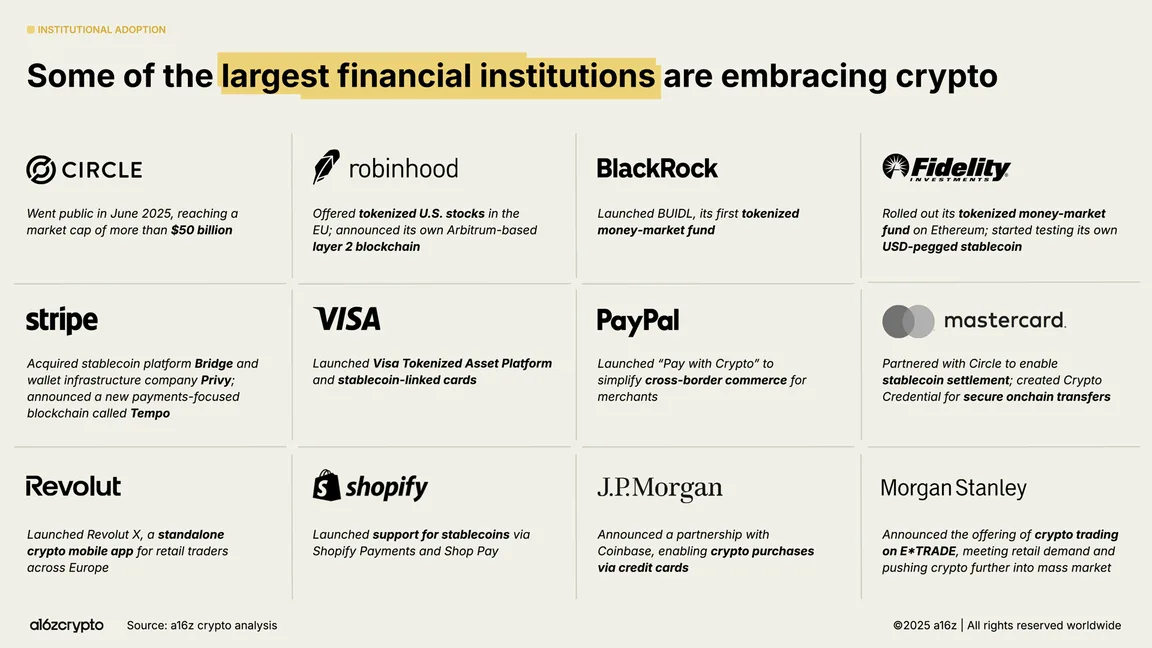
So: the money got institutionalized, the coins got custodied, the dollar won, the state showed up with a permit process, and the people who said “not your keys, not your crypto” in 2017 are, statistically speaking, holding IBIT. If you were in this for decentralization, sorry, you lost. Not dramatically, not in a crash. You lost the way most things lose: by being absorbed.
I’ve worked in crypto for five years. My actual job, as of this writing, is explaining onchain index funds to people, which puts me somewhere on the org chart of the absorber. I’ve been watching this play out in real time. And then I got to thinking about my favorite German monk.
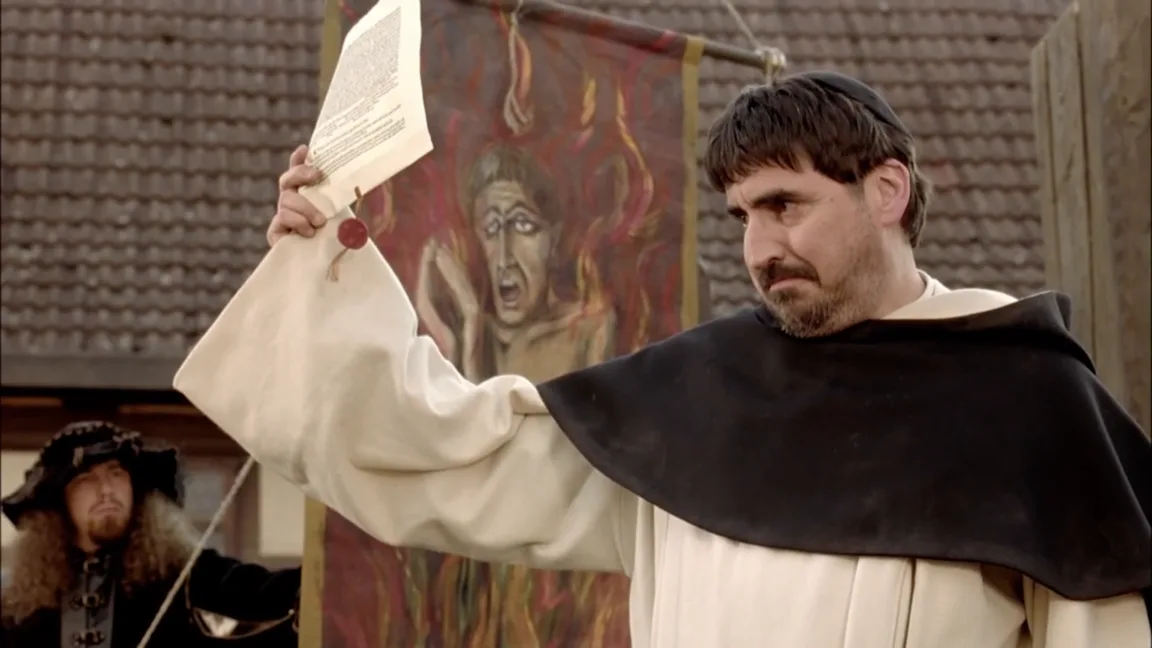
In June of 1520, Pope Leo X published a bull2 called Exsurge Domine, Latin for “Arise, O Lord” — which is how it opens, and which continues, more or less immediately, with a pig: “A wild boar has invaded Thy vineyard.” The vineyard is the capital-C Church. The boar is a 36-year-old Augustinian friar from Wittenberg named Martin Luther, and the bull lists forty-one of his propositions, condemns each one, and gives him a generous sixty days to recant.
We’re talking about the most powerful institution in Europe. It’d run the continent’s spiritual life for well over a thousand years, crowned kings, and in some parts of Germany owned something like a third of the land. And its official, considered reaction to a theology professor with a hot little pamphlet is a wild animal is loose in the vineyard. Do confident institutions talk like that? No… that’s the voice of an institution that has seen the numbers.
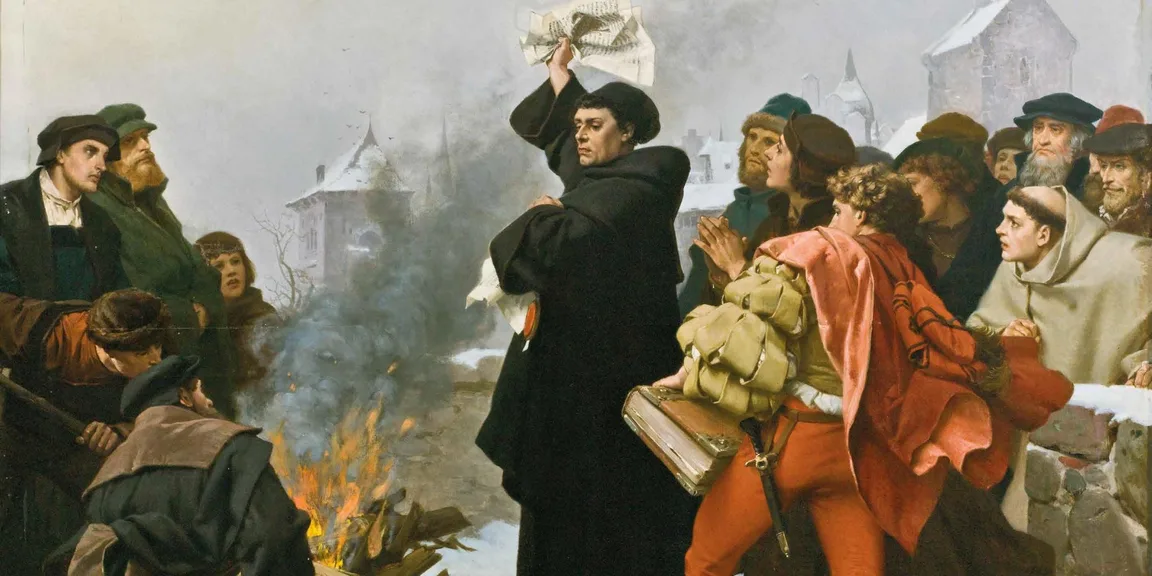
Luther, as you saw above, burned it. December 1520, with a crowd of students outside the Elster Gate in Wittenberg, along with a copy of canon law for good measure. Get rekt, Rome! He was excommunicated a month later.
The truth is, though, this isn’t a story about a pig triumphing over a pope. It’s a story about who ended up with the vineyard. And the answer is unambiguously not porcine, which turns out to matter in the Year of Our Lord 2026.
So let’s talk about the Reformation: what Rome was actually selling, who got the vineyard, and the one thing the new owners couldn’t do.
Here’s the business model of the Church in 1517:
You’re a guy in Saxony, a peasant. You’ll die, and when you do the math on your soul is Not Good. The only institution that can do anything about it is the Church, which controls the sacraments: the only onramp to grace and therefore eternal life (as opposed to eternal damnation and/or purgatory). The Church reads the Bible for you, in Latin, a language you don’t speak, from a book you can’t afford and couldn’t read if you could. Your priest interprets it for you. His bishop interprets him. Rome interprets the bishop. There is one source of truth and exactly one institution authorized to interpret it.
Oh, and it charges fees.
The specific fee that set Luther off was the indulgence, which was basically a certificate that reduced your time in purgatory (or a dead relative’s!) in exchange for money. In 1517 a Dominican named Johann Tetzel was working the towns around Wittenberg selling them with a jingle every Reformation textbook and confirmation curriculum quotes (“As soon as the coin in the coffer rings, the soul from purgatory springs”), and the proceeds were going (officially) to rebuild St. Peter’s Basilica in Rome.
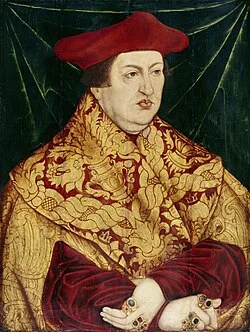
Unofficially, half of it was going to pay off a loan. The Archbishop of Mainz, Albert von Brandenburg, had borrowed a fortune from the Fugger banking house of Augsburg to buy his archbishopric (he was already holding two other sees, which was against the rules, so it cost a little extra), and the indulgence sale was structured so that Albert’s cut went straight to servicing the debt. Fugger agents traveled with Tetzel; they held a key to the strongbox. The most infamous sale of grace in Christian history was, at the operational level, a debt-collection scheme run by a bank.
So when Luther writes his ninety-five theses that October, and they are, at their core, a complaint about who gets to sit between a person and their salvation and what they get to charge for the seat, he’s not making a purely theological argument.3 He’s arguing about money leaving Germany. Specifically, he’s calling out a middleman with a monopoly on the only thing that matters, selling access to it at a markup with the books kept in a language you can’t read.
The business model should sound familiar.
The theses were published in Latin as an academic document addressed to other theologians: ninety-five numbered propositions for a disputation at the university. Luther mailed a copy to Albert (the archbishop with the Fugger loan) the same day. Whether he actually nailed them to the Castle Church door is an open debate,4 but it doesn’t matter because the door isn’t how it spread. Somebody translated them into German, somebody else had a printing press, and within weeks there were copies in Nuremberg and Leipzig and Basel. Within a couple of months they were everywhere. Luther, by his own account, was surprised and a little alarmed. That wasn’t the intended audience; they weren’t written for those people.
The technology outran the author. A document meant for a few dozen specialists escaped into a distribution network nobody controlled. The Church had survived a thousand years of heresies partly because it could find and burn the heretics’ missives. This time there were too many copies.
Four hundred and ninety-one years later, on October 31, 2008 — Reformation Day, no joke — someone calling themselves Satoshi Nakamoto sent a nine-page PDF to a cryptography mailing list, subject line “Bitcoin P2P e-cash paper.” The first reply was skeptical.5 It was an academic document, for specialists, written in the specialists’ language, proposing a way to keep a ledger that nobody in particular is in charge of. It, too, escaped. Also not because of a door. Because of the network.
Everybody who’s written about Luther and Bitcoin has done the printing-press-is-the-internet thing, and yeah okay it’s true, but it’s the least interesting true thing about the comparison. What’s interesting is what happened next, once the document had achieved escape velocity and the monopoly was panicking: in both cases, the people who came to the boar’s aid weren’t the peasants.
If your mental image of the Reformation is Luther and a bunch of liberated laypeople reading their German Bibles by candlelight and defiantly telling Rome where to stick it, let me introduce some new characters to the stage: princes.
Luther survived because Frederick the Wise, Elector of Saxony, wanted him to. By 1521, Rome had excommunicated Luther, which settled spiritual matters but not the question of what on literal earth to do with him. Emperor Charles V summoned him to the Diet of Worms, put his writings in front of him, and asked him one last time to recant. Luther refused.6
Following the Diet of Worms, Frederick had Luther “kidnapped” on the journey home and stashed in Wartburg Castle for the better part of a year. There, bless his heart, Luther translated the New Testament into German in eleven weeks, give or take — probably the single most important thing he ever did (and something we’ll come back to). Whatever Frederick thought of Luther’s theology, he also had a territory, and Rome owned a lot of it and had been draining it of money for generations. Now into his lap dropped a theological argument that said the Pope had no authority over any of that. Princes across Germany read the same argument and did the same math. Go Lutheran,7 and the monasteries in your territory are yours. The land is yours. The tithes are yours. The bishop answers to you. The Reformation became an enormous asset transfer.
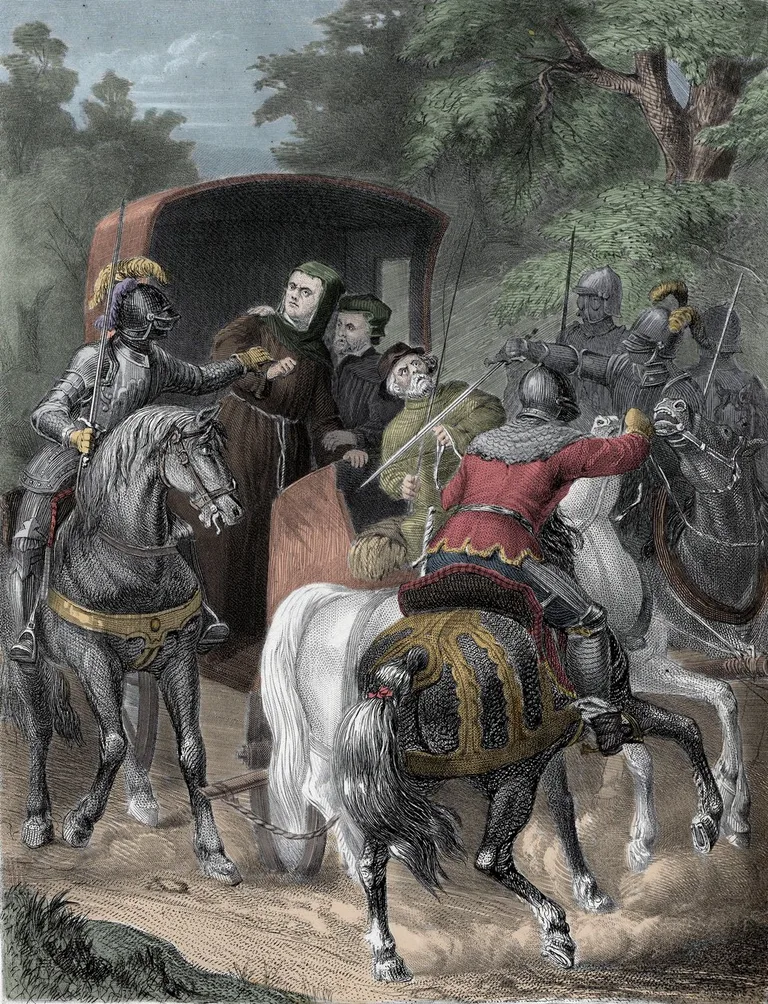
And then, in 1525, when the peasants had absorbed all the talk about Christian freedom and drew a predictable conclusion that maybe some of it applied to serfdom too, they rose up across southern Germany. In response, Luther wrote a pamphlet called Against the Robbing and Murdering Hordes of Peasants and told the princes to “smite, slay, and stab” them “just as when one must kill a mad dog.” And the princes did. Something like a hundred thousand of them. The boar sided with the vineyard’s new owners.
The princes weren’t done. In 1531 Protestant rulers formed the Schmalkaldic League to defend their new faith and, conveniently, their new independence from Rome and the emperor. Charles V went to war with them and won. They came back. By 1552 another revolt of German princes had Charles fleeing across the Alps and forced him to negotiate. Three years later they signed the deal: the Peace of Augsburg.
Augsburg, if you recall, is Fugger territory. The principle it established has a Latin tag, cuius regio, eius religio: whose region, his religion. That is, every prince picks, Catholic or Lutheran. His subjects inherit his choice. Don’t like it? You’re free to move.
This is one way the Reformation looks when you zoom out far enough. A treaty, negotiated by dukes, that replaced one church with a couple dozen churches, each one owned by the state it sat in, with the same buildings, familiar smells and bells and, in a lot of cases, the same priest with a new job title. Calvin ran Geneva like a police state and burned a heretic of his own. And a couple generations after that, the Thirty Years’ War killed by some estimates a third of the people in Germany arguing about the fine print.
If you’d told a radical in 1520 that this is where the whole thing wound up, they’d have said the Reformation sold out. That it had been absorbed. That the princes bought it, the same way BlackRock bought Bitcoin.
Here’s what didn’t happen after 1555.
Nobody put the Bible back in Latin.8 To borrow a German phrase: Die ich rief, die Geister / Werd ich nun nicht los.9
The princes captured the Reformation and the state churches were compromised and the peasants were slaughtered and the whole thing was, at the level of who-got-the-land, a coup by the already-powerful. Still: after 1555, every Lutheran state church in Germany used Luther’s German Bible, and within fifteen years of 1522’s “September Testament” (Luther’s translation of the New Testament)10 the Catholics were printing German Bibles of their own. They had to. Once the text was in the vernacular, you couldn’t compete for souls with a church that let people read it. The Catholic Church reformed too. Indulgences for money: banned, 1567. Rome didn’t have a change of heart; they had a competitor.
Institutions are built to survive. Everybody has to bank somewhere, everybody has to pray somewhere, and most people most of the time want someone else to hold the keys, and that’s fine. Pretending otherwise is how you get a movement that’s only for the ten thousand people who enjoy it. The test is: can anyone still run the monopoly? Can the spirits be unsummoned? Can anybody ever put the text back behind the Latin wall and charge a premium to hear it?
Yeah, no. They couldn’t. That’s what Augsburg settled, whatever the dukes thought they were signing. The monopoly was dead. Everything else was details.
Now run it back on money.
Can anyone put Bitcoin back in the vault? Unmine the genesis block? No. BlackRock holds four percent of it, and the other ninety-six percent is held by everyone from Strategy to a guy in Iowa with a steel plate in a desk drawer, and BlackRock can’t reissue it any more than the Elector of Saxony could rewrite Romans. IBIT exists because the bank came to the blockchain, not the other way around.
Likewise, can anyone put the dollar back on rails only banks control? Sure, Tether is dollars. Yes, the reserves are T-bills. The reason a freelancer in Lagos or a landlord in Buenos Aires or a mom in Manila holds Tether is that it’s probably the first dollar they could get without a bank’s permission, at 2 a.m., on a Sunday, across a border, with a phone. The machinery of the dollar came to crypto because it had a competitor, and now it travels on rails its issuer doesn’t own. The Treasury writing rules about who can issue it is Rome printing a German Bible. Cuius regio. The state put its seal on the thing. Fine. You only put your seal on a thing you’ve conceded you can’t stop.
Can anyone make self-custody go away? Most people will never hold their own crypto keys. Most Lutherans never read Hebrew, either, but that was never the point. The point is that there’s a twelve-word phrase you can memorize that lets you hold value no institution on Earth can freeze, and because that option exists, every institution that wants your business has to be better than it. Coinbase has to be better than a hardware wallet. Your bank has to be better than a stablecoin. Your currency has to compete with assets its issuer can’t alter. That’s the entire mechanism. Not that everyone leaves the church. That the church can no longer assume you’ll stay.
The pluralism isn’t the consolation prize for losing the decentralization war. The pluralism was the war. The monopoly was the enemy, and the monopoly is dead, and the fact that the corpse got divided up among princes and index funds doesn’t refute the Reformation. It’s what a reformation looks like from the inside at middle age.
There are obvious downsides. Cuius regio meant freedom for princes first and for people much later. It took another century, and one of the deadliest wars in European history, to get to Westphalia, where an ordinary person could finally disagree with his prince and keep his house. If crypto’s Peace of Augsburg is being signed now, with ETFs and stablecoin licenses and the SEC in the room, then the honest read is that the institutions got their freedom first and the rest of us are somewhere in the emigration clause.
Back to the pig.
Leo was right to be afraid. He looked at a friar with a pamphlet and correctly saw the end of the world as he ran it. What he got wrong was the animal. The boar didn’t take the vineyard. The boar sided with the princes, and the princes took the vineyard, and they took it for the land and the tithes and the freedom from Rome’s fees, not for the theology, and then they built fences and hired their own vintners and kept making wine.
But now there were many vineyards; too many copies to burn.
Five hundred years later the Church is still standing, and so are the Lutherans, and so are the Calvinists and the Anglicans and the Presbyterians. None of them can sell you an indulgence, you can read the book in any language you want, and if you don’t like your church you can walk out the door on a Sunday morning without looking over your shoulder in fear of retribution from your mayor.
It’s going to look like that for money, too. It already does. Purists will keep writing the obituary, and the obituary will keep being factually correct and completely beside the point, and meanwhile somebody in Manila is holding dollars nobody gave her permission to hold.
A wild boar has invaded Thy vineyard.
Get used to it.
- Strategy, f.k.a. MicroStrategy. Technically the addresses attributed to Satoshi Nakamoto are the largest single holder, at an estimated 1.1M BTC, but it’s an estimate, it’s spread across thousands of addresses, and none of them have moved since 2010. Largest holder that has ever actually done anything: Strategy. ↩
- A “bull” is a formal decree from the pope, named not for the animal but for the bulla, the lump of lead stamped with the papal seal and hung from the document by a cord so nobody could pretend it wasn’t real. Each one goes by its first two or three words in Latin. ↩
- The Ninety-five Theses are also known as Disputatio pro declaratione virtutis indulgentiarum: Disputation on the Power and Efficacy of Indulgences. You gotta admit the Latin kinda rips. ↩
- If you really want to get in the weeds: https://heidelblog.net/2020/10/the-ninety-five-theses-did-luther-nail-or-mail-them-or-both/ ↩
- Because this was 2008, it’s all preserved online, including the skeptical first reply: “The way I understand your proposal, it does not seem to scale to the required size.” ↩
- This is where Luther supposedly said, “Here I stand, I can do no other. God help me. Amen.” The line is almost certainly too good to be true… it doesn’t appear in the earliest accounts of the Diet. ↩
- I always take joy pointing out that Luther himself wasn’t a fan of his name being used for the movement: “I ask that people make no reference to my name; let them call themselves Christians, not Lutherans. What is Luther? After all, the teaching is not mine. Neither was I crucified for anyone. St. Paul, in 1 Corinthians 3, would not allow the Christians to call themselves Pauline or Petrine but Christian. How then should I, poor stinking maggot-fodder that I am, come to have people call the children of Christ by my wretched name? Not so, my dear friends; let us abolish all party names and call ourselves Christians, after him whose teaching we hold.” Martin Luther, A Sincere Admonition by Martin Luther to All Christians to Guard Against Insurrection and Rebellion. ↩
- It’s true that Latin was the language of the Catholic Mass until the 1960s, when the Second Vatican Council finally let priests say it in whatever language their parishioners actually spoke — a little over four centuries after Luther started doing it in German. And technically, it’s still the Church’s official language. The point is about the Bible itself being available in everyday language, on ordinary people’s bookshelves. ↩
- “The spirits I summoned, I now can’t get rid of.” Goethe, “Der Zauberlehrling,” lines 91–92. ↩
- I think you’ll join me in disbelief that not a single band in the history of Christian music has named itself September Testament. ↩